
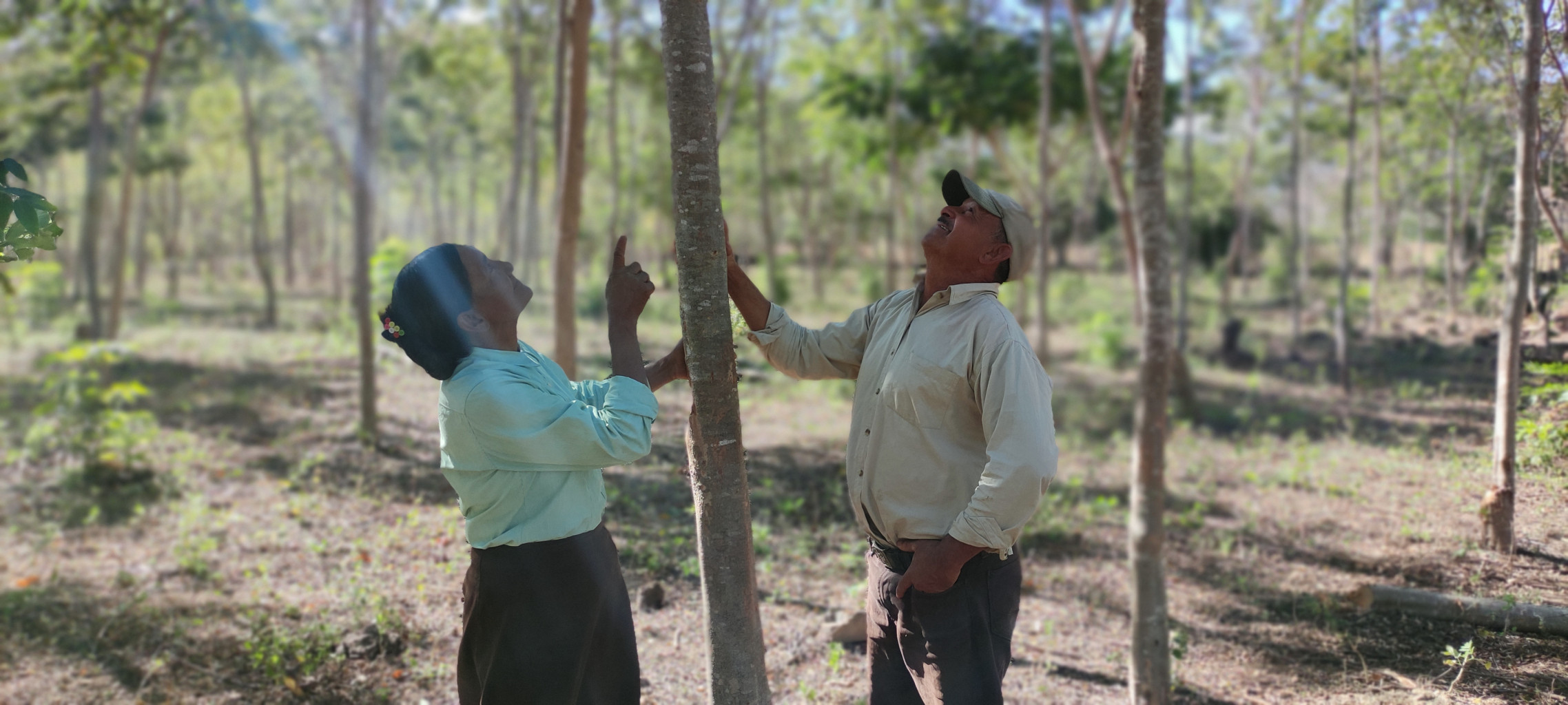
Restoring forests and supporting resilient communities
In Nicaragua, myclimate supports reforestation efforts that restore degraded land, strengthen local water systems, and create long-term environmental and social benefits. Working closely with farming communities, the project promotes sustainable land use, protects biodiversity, and helps regulate the hydrological cycle in one of the country’s most critical watersheds. Beyond capturing carbon, these activities contribute to healthier ecosystems and more resilient rural livelihoods. Learn more about the initiative below.

Supporting rural communities
There's a way to make a positive impact on the environment and at the same time help rural communities with this reforestation and sustainable cooking project in Nicaragua. The project is situated on a critical watershed that feeds into Nicaragua's most important estuaries, the Estero Real. This estuary is home to one of the biggest extensions of mangroves and migratory birds in the region, and has been recognized by the Ramsar Convention on Wetlands of International Importance. By reforesting this region, the program plays an important role in regulating the hydrological cycle, providing important water and biodiversity benefits both locally and internationally, and improving the quality of life of smallholder farmers.
But this project isn't just about planting trees. Participants entering the project own underutilized land and must demonstrate that participating will not conflict with their subsistence activities, notably cattle ranching and agriculture. The project area covers 86 square kilometers and will support rural communities desperately in need of support and incentives to take control of their resources. Nicaragua is the second poorest country in the Western Hemisphere with a GDP per capita income of $1,079 per year, so this project is making a huge difference in the lives of local families.
One of the key supporting activities is land use planning around watersheds. The project area includes one of the most critical watersheds in the municipality of San Juan de Limay, which suffers from seasonal water shortages and flooding. Increased forest cover will retain water through the dry season and minimize flooding in the rainy season. In addition, the project will distribute fuel-efficient fireplaces equipped with chimneys that reduce smoke in the household, generating health benefits, particularly for women.

"The trees improve the temperature of the farm and the planet as well. They also give us wood, shade, and better soil, helping stop erosion."
Way beyond planting trees
The project in Nicaragua addresses the causes of deforestation, ensures direct and ongoing community involvement and technical training, and provides financial benefits for participants throughout the project. This occurs through payments for ecosystem services (PES) and income from timber and sustainable forest products. As a result, this multi-faceted approach will reduce forest degradation by easing pressure on surrounding natural forest while at the same time sequester quantifiable volumes of CO2 from the atmosphere and improve the environmental and socio-economic conditions of families located in the community of San Juan de Limay.
By establishing multiple small-scale native species forest plantations on smallholder land, this project is creating a sustainable source of income for local families while also helping to protect the environment. And by working with the community and providing ongoing training and support, the project is building a brighter future for everyone involved!
